


The Defender is a great off-roader, renowned for its rugged charm and go-anywhere capability....





There is something dangerously seductive about a low mileage Defender. The advert practically glows at you. Tiny mileage, clean seats, shiny paint, barely worn pedals, and possibly a phrase like “dry stored” thrown in for good measure. Before you know it, you are picturing yourself rumbling down a lane, smugly convinced you have beaten the market and found the one everyone else missed.
But here is the slightly annoying truth: low mileage does not automatically mean low trouble. Sometimes it means careful ownership, gentle use and a vehicle that has been treated like a treasured family member. Other times, it means the Defender has spent years sitting still, quietly developing problems while everyone admired how tidy it looked. A Defender is a working machine, not a porcelain spaniel. It generally prefers being used.

The mileage myth
Mileage is useful, of course it is. A Defender that has covered huge miles with no history, dubious noises and an interior that smells faintly of sheep, wet dog and regret is not something to ignore. But mileage is only one part of the story. Condition, maintenance, storage, usage pattern and honesty of ownership matter just as much, and sometimes more.
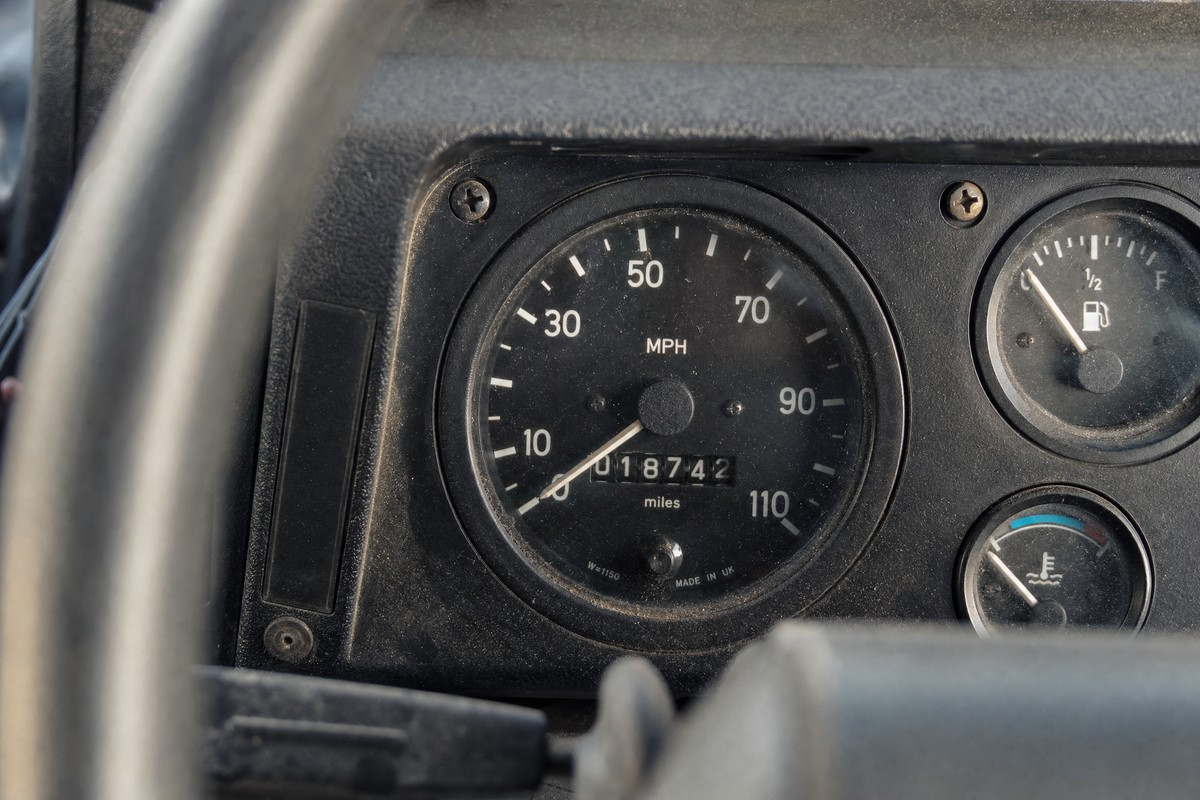
The problem with a very low mileage Defender is that buyers can become hypnotised by the number on the clock. It is a bit like seeing someone with perfect hair and assuming their life is in order. Lovely from a distance, but there may still be chaos in the cupboards. A Defender that has done 90,000 miles with regular servicing, proper journeys and sympathetic maintenance can be a far healthier thing than one that has done 18,000 miles in tiny bursts to the MOT station and back.
Sitting still is not the same as resting
Cars are full of parts that like movement, heat, pressure and circulation. Oil needs to move. Brakes need to be used. Tyres need to roll. Seals need to stay supple. Fuel needs to be fresh. A Defender parked up for long stretches may look calm and innocent, but mechanically, it can be sulking.
This is where low mileage becomes awkward. A vehicle can age even when it is not travelling. Rubber dries. Metal corrodes, fluids absorb moisture, batteries discharge and fuel degrades. Time still does its work, even if the odometer is having a lovely long nap.
Tyres can look fine and still be past it
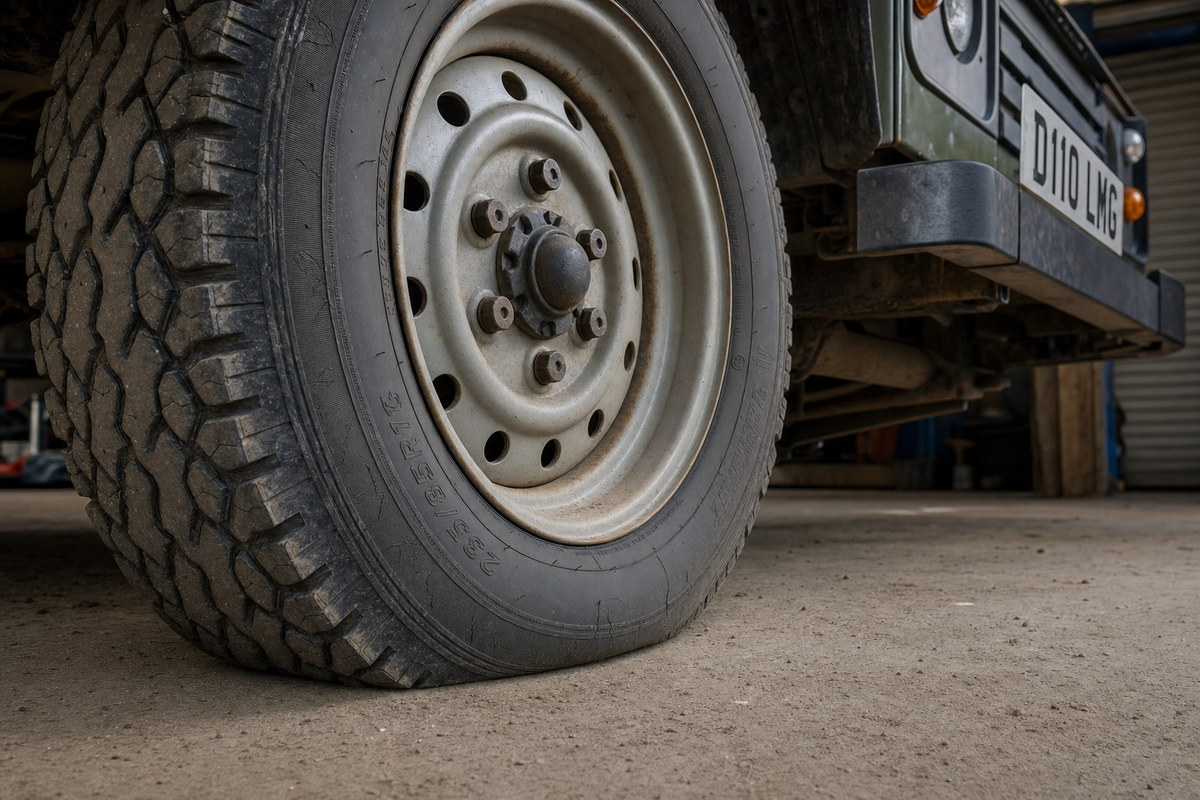
Tyres are one of the easiest things to overlook on a low mileage Defender because the tread can look excellent. That is the trap. Plenty of tread does not guarantee a healthy tyre. If a vehicle has been sitting with its weight pressing on the same section of rubber, flat spots can develop. Sometimes they ease once the tyre warms up, and sometimes they leave you with a vibration that feels like the Defender is trying to churn butter.
Age matters too. Rubber hardens and cracks over time, especially if it has been exposed to sunlight, ozone, damp storage or big temperature swings. Sidewall cracking, perishing around the tread blocks and old date codes should all make you pause. A Defender on aged tyres might look ready for an adventure, but tyres are not decorative black circles. They are the only thing touching the road, which is quite a big job when you think about it.
Brakes do not enjoy being ornaments
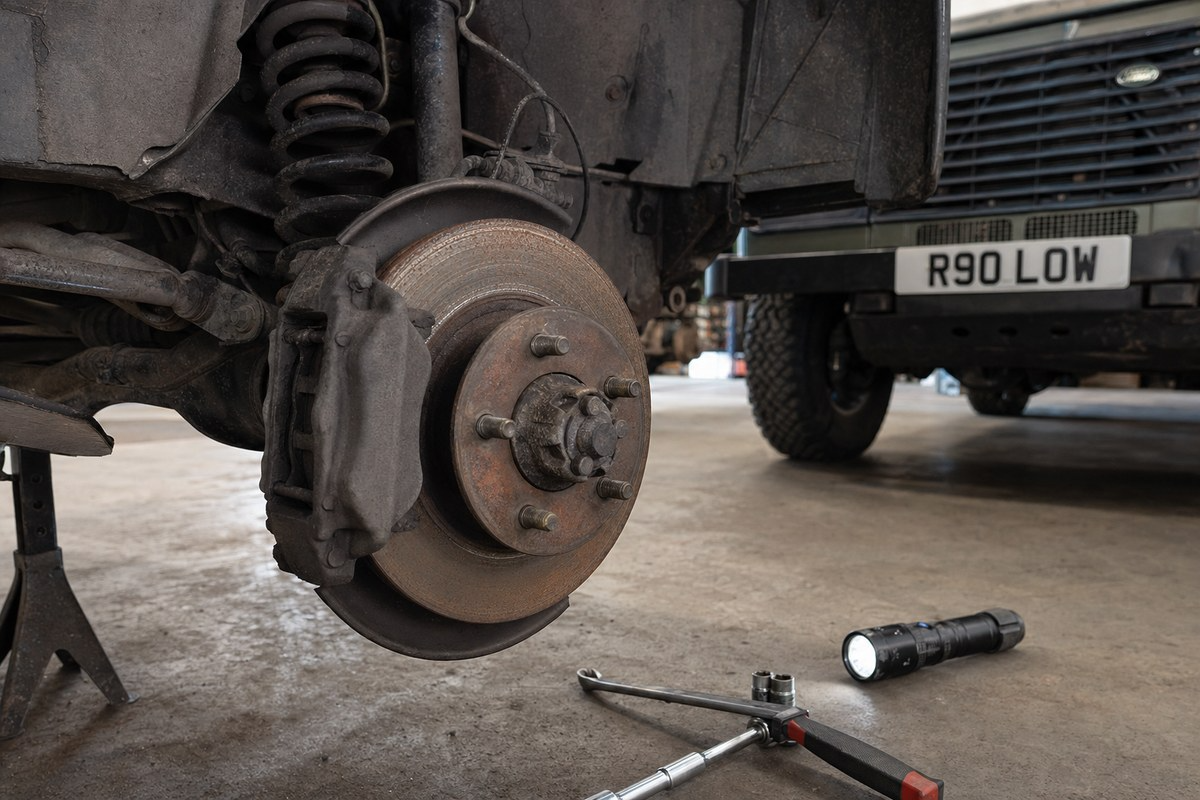
Brake discs can rust when a vehicle sits, especially in our gloriously damp British climate, where even the air sometimes feels like it has been through a dishwasher. A little surface rust can clear after gentle use, but deeper corrosion, pitting or sticking components are a different matter. Calipers can seize, sliders can stick and pads can bind to discs if the vehicle has been left for long enough in the wrong conditions.
Classic Defenders also have their own little personality traits, and the transmission handbrake deserves a special mention. If things have been left damp and unused, do not be surprised if the braking system needs more attention than the mileage suggests. A shiny low mileage Defender that stops badly is not a bargain. It is a very expensive way to raise your heart rate.
Batteries hate neglect
A Defender battery does not sit there patiently preserving itself like jam in a cupboard. Batteries naturally lose charge over time, and modern vehicles can have small electrical draws even when parked. Older Defenders are simpler, but that does not make the battery immortal. Once a lead acid battery is allowed to go flat and stay flat, sulphation can reduce its capacity and shorten its life.
This is why a Defender that has barely moved for months can suddenly need a jump start, a new battery or a session of electrical head scratching. If it has been kept on a proper maintenance charger, that is a good sign. If the owner says, “It always needs a boost, they all do that,” feel free to raise an eyebrow. They do not all do that. Some of them are just asking for help in the only dramatic way they know.
Seals and hoses need life in them
Rubber seals, hoses and gaskets do not love being abandoned. They can dry, harden, flatten or crack, particularly when a vehicle sits for years with fluids not circulating and components not warming through properly. Then, when the Defender is finally pressed back into service, the leaks begin. Oil here, coolant there, a little drip that becomes a little puddle, then suddenly everyone is pretending not to notice the cardboard under the engine.
This does not mean every low mileage Defender is a leaky disaster waiting to happen. It means you should inspect it properly and not let a clean odometer do all the talking. Look for sweating around seals, dampness around hubs, coolant staining, perished hoses and anything that looks suspiciously freshly cleaned. A spotless engine bay is lovely, but if it was spotless yesterday for the first time in ten years, that is worth knowing.
Fuel systems can quietly turn unpleasant
Fuel does not improve with age. Petrol can go stale, leaving sticky varnish deposits that can upset pumps, injectors and carburettors on older vehicles. Diesel is more stable in some ways, but it can still suffer from contamination, water build up and microbial growth if stored badly. That is a particularly unpleasant little world, and not one you want living in your tank.
Condensation is another problem. A vehicle kept with a near empty tank can collect moisture as temperatures change. Water in the fuel system can lead to corrosion and running issues, and it is exactly the sort of hidden problem that does not show up in a flattering set of photos. If a Defender has been stored properly with fresh fuel, sensible maintenance and occasional real use, wonderful. If it has sat for years with mystery liquid in the tank, less wonderful.
Short journeys can be worse than honest miles
One of the biggest misunderstandings around low mileage is assuming that fewer miles must mean easier miles. Not always. A Defender that only ever potters half a mile to the village shop may never get properly warm. The engine oil may not reach a temperature where moisture and fuel dilution can burn off properly. Exhaust systems can rot from condensation. Batteries may never recover the charge used to start the vehicle.
By contrast, a Defender that has regularly done longer journeys may have had an easier mechanical life despite showing more miles. Warm oil, working brakes, charged battery, rotating tyres and proper operating temperature all matter. A vehicle needs to stretch its legs. Nobody stays healthy by walking from the sofa to the biscuit tin and back once a fortnight, even if their step counter looks impressively low.
Storage matters more than the sales patter
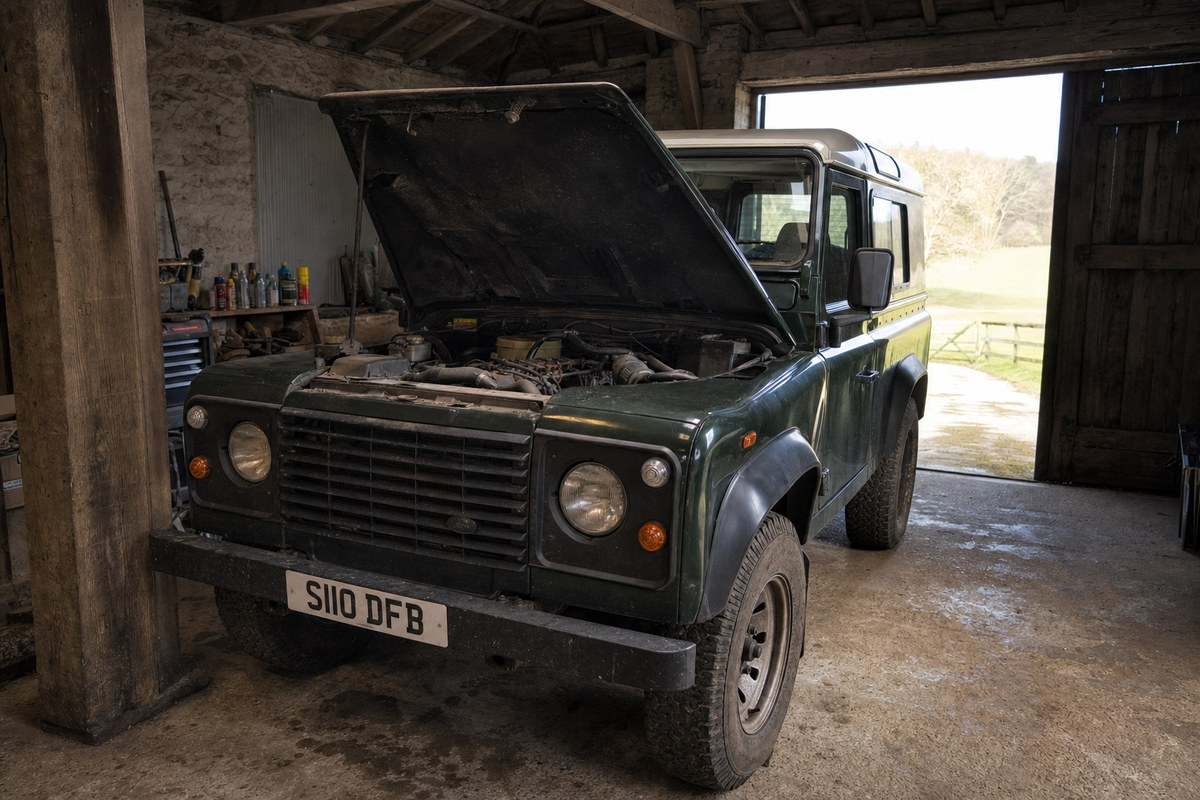
“Stored indoors” sounds reassuring, but it can mean anything from a warm dry garage to a damp barn with a roof that has been negotiating with the weather since 1974. Dry, ventilated storage is good. Damp, stagnant storage is not. A Defender parked on grass, under trees or in a poorly ventilated building can deteriorate faster than one used regularly and washed properly.
You also want to know whether it was prepared for storage. Was the battery maintained? Were tyres inflated correctly or the vehicle moved occasionally? Was the fuel kept fresh? Were fluids changed based on time rather than mileage? Was it started and left idling for five minutes, which often sounds useful but may not be enough to warm everything properly? The phrase “hardly used” should not always make you relax. Sometimes it should make you ask better questions.
The polished problem
This is where I become a little opinionated, so brace yourself. Some low mileage Defenders are priced as if the low mileage has magically protected every component from time, moisture and neglect. It has not. A deep shine, a tidy cabin and an odometer reading that makes everyone go quiet for a moment are not a mechanical inspection.
A beautifully polished problem is still a problem. It just photographs better. If the underneath is crusty, the tyres are old, the brakes are binding, the battery is weak, the fuel smells suspicious and the service history has gaps wide enough to park another Defender in, then the mileage is not a golden ticket. It is just one interesting detail.
What should you check before getting carried away?
Start with the service history and MOT history. You are looking for consistency, not just low numbers. Long gaps, repeated advisories, corrosion notes, brake imbalance, tyre age issues or sudden mileage changes all deserve attention. Ask how often it was used, how it was stored and whether time based maintenance was carried out even when mileage was low.
Then look at the physical evidence. Check tyre date codes and sidewalls. Look for brake corrosion and signs of sticking. Test the battery properly rather than just accepting that it started once in front of you. Inspect hoses, seals and fluid leaks. Smell the fuel if there is any doubt, and pay attention on a proper test drive. A low mileage Defender should feel honest, not fragile, reluctant or oddly vague.
The best low mileage defenders do exist
To be fair, not every low mileage Defender is a trap wearing tyre shine. Some are genuinely excellent. There are owners who store them properly, service them by the calendar, keep them dry, use maintenance chargers, move them regularly and understand that preservation is active work, not just parking something under a cover and hoping for the best.
Those Defenders can be wonderful. They may command strong money, and rightly so. The key difference is evidence. A genuinely cared for low mileage vehicle will usually come with paperwork, sensible explanations and a condition that makes sense from top to bottom. It will not rely purely on a small number on the dashboard and a story that sounds like it was assembled in a hurry.
So, bargain or beautifully polished problem?
A low mileage Defender can absolutely be a bargain, but only if the low mileage is backed up by proper storage, regular maintenance and signs of real care. If it has been sitting still for years without preparation, it may need tyres, brakes, battery work, seals, hoses, fluids and fuel system attention before it is truly ready for regular use. Suddenly that bargain can start behaving like it has discovered your bank card.
So do not be dazzled. Be curious. Ask awkward questions. Crawl underneath. Check the boring bits. The best Defender is not always the one with the fewest miles. It is the one that has been looked after properly, used sensibly and maintained by someone who understood that even a tough old Land Rover does not appreciate being treated like furniture. In the end, a Defender is happiest doing Defender things. Moving, working, warming up, cooling down, rumbling along lanes, carrying muddy boots, annoying people behind you on hills and generally being part of life. A low mileage one can be brilliant, but only if it has been preserved, not neglected. There is a very big difference, and your wallet will know it before your heart admits it.

The Defender is a great off-roader, renowned for its rugged charm and go-anywhere capability....

As we all know, towing a caravan or trailer should be done in a careful manner, keeping to a...

One of the most common issues that car owners face is a flat battery - especially if the vehicle...